

-
-
-
CONTACT
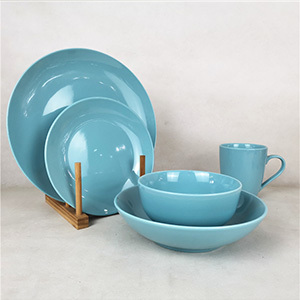
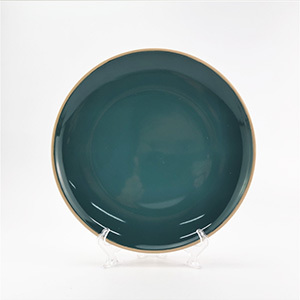
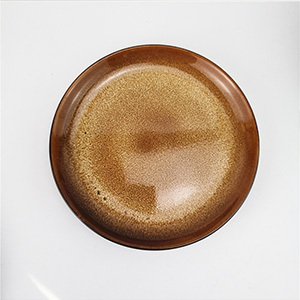
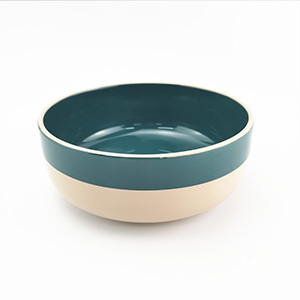

The main differences between pottery and porcelain
Release time: 2024-03-20
Simply put, a vessel fired with clay is called pottery, while a vessel fired with clay is called porcelain. Ceramics is a general term for pottery, stoneware, and porcelain. Any vessel made from clay, two different types of clay, through processes such as batching, molding, drying, and roasting, can be called ceramics. Ceramics include a wide range of materials, some can withstand water, some can withstand acid, and are widely used in industries such as construction, chemical engineering, power, machinery, and daily decoration. In addition, products made from materials other than clay using ceramic manufacturing methods are also called ceramics, such as block talc porcelain. Metal ceramics, capacitor ceramics, magnetic ceramics, etc Widely used in industries such as radio, atomic energy, rockets, semiconductors, etc. Currently, all ceramic products are collectively referred to as "inorganic non-metallic solid materials.".
Pottery and porcelain are daily necessities that people often come into contact with, sometimes appearing similar on the surface, but after all, they each have their own characteristics and are different.
Pottery is generally made with clay as the base. The temperature for firing pottery is generally between 900-1050 ℃. If the temperature is too high, the pottery will be burned and deformed. The texture of the body of pottery is relatively loose, with many pores, thus having strong water absorption. The surface of ordinary pottery is unglazed, and even if there is glaze, it is low-temperature glaze.
The history of firing pottery in our country is about 10000 years. In the primitive society, pottery was first made into a certain shape by hand kneading. Later, it developed into rolling clay into clay strips of the same thickness, and then rolling the clay strips into a certain shape, smoothing the inside and outside with hands. At the stage of patrilineal society, the system of rotation emerged. After entering feudal society, the molding method was invented, which involved filling clay into the mold and removing the full form of the object. People speculate that the most primitive firing method was pile firing, which involves burning dried pottery blocks in open-air firewood. Six or seven thousand years ago, pottery kilns were used to burn pottery.
Archaeologists classify pottery into series based on its color, including red pottery, gray pottery, painted pottery, white pottery, painted pottery, black pottery, and glazed pottery.
Red pottery is the most common type of pottery in primitive society, with a color similar to that of red bricks. This is when fully supplying gas during kiln firing, creating an oxidizing atmosphere that converts iron in the clay into trivalent iron, resulting in a red color.
Grey pottery refers to pottery that is gray or gray black in color. This is in the later stage of kiln firing, controlling the temperature to form a reducing atmosphere. Due to the lack of oxygen in the kiln, the oxide of iron in the clay is converted into divalent iron, and the pottery turns gray or black. Grey pottery is the most common and generally rough.
Colored pottery is a type of pottery that is painted on the ceramic body before being put into the kiln. After firing, it appears in colors such as ochre, black, and white. The human faced fish patterned basin at the Banpo Site in Xi'an is an example.
White pottery, also known as white pottery, was only found in the late Neolithic period mainly because the iron oxide content in the clay was low, and it appeared white after excluding the interference of some pigments.
Painted pottery is also colored, and the difference between it and painted pottery is that the pottery is fired and then colored. Due to the color not being baked, it is not firmly bonded to the body and is easy to peel off. The Terra Cotta Warriors unearthed in Xi'an belong to painted pottery.
Black pottery refers to bright and pitch black pottery, which is mainly found in the matrilineal social stage. This is done by fuming with thick smoke in the later stage of roasting, allowing carbon particles in the smoke to penetrate and fill the gaps in the pottery, resulting in a black color. Some of the walls in black pottery products are as thin as eggshells and are called "eggshell pottery", which is very precious. Glazed pottery refers to pottery with a layer of lime glaze on its surface. The main components of glaze are silicon oxide, alumina, calcium oxide, sodium oxide, etc. It can be prepared by adding lime and clay, and after melting, it appears in a glassy state. If some metal oxides such as copper oxide and cobalt oxide are added to the glaze, green, blue and other colors will appear after firing. The common Tang tri color is glazed pottery
Related news
2025-11-22
Exploring Applications of Queenza Import and Export Company in Global Trade
Delve into the diverse applications of Queenza Import and Export Company in international markets and trade.
2025-11-19
Navigating the Waves of Trade: Insights from Queenza Import and Export Company
Discover the latest trends in the import-export industry with insights from Queenza Import and Export Company.
2025-11-16
Unlocking Global Trade: The Rise of Queenza Import and Export Company
Discover how Queenza Import and Export Company is revolutionizing international trade.



ONLINE MESSAGES
PRODUCTS
CONTACT US
Address:No.179 Wenhua road,Luozhuang district Linyi city ,Shandong ,China.
E-mail: sales01@lyqueenza.com / sales02@lyqueenza.com
TEL: +86-539-8266583
Phone: +8615866917077
Contact person: Mr Liu
Copyright © 2024 Linyi Queenza Industry & Trade Co., Ltd.